Thursday, March 20, 2008
新电话 - SE K770/W580
P/S: 我的猪朋Mr Chet也换了咖啡色的K770
Monday, March 03, 2008
Lessons from Warren Buffett’s guru
Phillip Fisher says he doesn't want a lot of good investments but a few good outstanding ones.
Q: What can we learn from Philip Fisher?
Philip A. Fisher, one of Warren Buffett’s investment gurus, is known for his philosophy on the qualitative aspects of selecting a good company for investment. Buffett learned qualitative analysis from him.
Fisher got his early education at Stanford Business School. He joined an independent San Francisco bank as a securities analyst in 1928, and founded Fisher & Co, an investment counselling business, in 1931.
According to his book entitled Common Stocks and Uncommon Profits, one of the most important investment philosophies from Fisher is Scuttlebutt, which he also calls “the business grapevine”, in investing.
Scuttlebutt is the use of the business grapevine to analyse a company. We can obtain the information from customers, employees, suppliers, academics, trade association officers, industry observers, etc. This information is crucial in determining the character of its managers and the potential of the company.
A good company should exhibit unquestionable management integrity, own highly competitive products, be in a healthy financial position, have good cost control and be effective in its research programme.
According to Fisher, even though it is hard to know quality of management, a good management team should possess the ability to carry out day-to-day tasks efficiently and have good long-term planning. The management should also have high integrity and maintain good labour, personal and executive relations.
Fisher is a believer of growth investing. We need to select stocks that have great potential to grow their businesses. It will be a waste of time to hold on to stocks that have no growth potential. He believes that we can get capital gains by buying into these companies as their stock prices would go up in line with the increase in their intrinsic value.
It requires extensive research before you can get one. Fisher said: “I don’t want a lot of good investments; I want a few outstanding ones.” These companies can be bought at high historic price earnings ratio (PER) because there is a possibility that their stock price is reflecting good news you don’t know about yet.
The growth companies should demonstrate strong and well-directed research capabilities. These companies should also exhibit an above-average sales organisation. Besides, they need to have a sustainable profit margin and good return on capital. Normally, these companies are the market leaders in the industry and have the advantages of scale.
A consistent and predictable dividend policy will provide the minimum returns to investors. Although high dividends are good for investors, to maintain business growth, high growth companies need to retain a certain level of profits for future expansion.
If a company is paying dividends with little retained earnings, it will cause lower reinvestment, which will affect its long-term growth. As mentioned earlier, the main returns to an investor is capital gain. He believes that buying into high growth companies will provide the capital gain.
When to sell
Fisher believes in long-term investment. According to him, the most important thing is to select the right stocks. “If the job has been correctly done when a common stock is purchased, the time to sell it is almost never,” he said. However, if we select the wrong stocks, we need to sell.
We need to admit that we have made mistakes in our calculation. This attitude is important as not many retailers have the courage to admit their mistakes. Furthermore, we should not expect to be right all the time. We should be aware that we can make mistakes and we will make mistakes in our analysis, but more importantly, we need to learn from our mistakes.
Fisher said: “The chief difference between a fool and a wise man is that the wise man learns from his mistakes, while the fool never does.”
Fisher will only call a sell on a stock when the company or industry has changed and the stock no longer qualifies as a growth stock or a better prospect is available elsewhere. He will not sell a stock just because a stock appears to be selling for a significantly above average PER or because the stock price has increased.
He believes that most investors always make mistakes by selling their stocks with the hope of buying them back at lower prices. In most instances, the investors miss the stock when it recovers.
Saturday, March 01, 2008
普吉岛旅游照(23-26 Oct 2007)
吴哥旅游照(11-14 Jun 2007)
相对于柬埔寨人来说, 吴哥窟不似是人间的制作, 而是一个神话传说. 按传统的说法, 居住于 Meru 山上的 Indra 神, 赐予人性的生命给祂的儿子Ketomealea, 让祂能保护佛教, 及维持其王国的光荣. 一个晚上, Indra 神 派遣 Meatolei 神到世上, 带回Ketomealea , 乘祂坐着马车前往拜访 33 神的天堂 ( Heaven of the 33 Gods ). 于停留时, Indra 神教授了 Ketomelea 10 种神圣的使命, 并连续七天, 于花园内, 替 Koetomelea 每天洗浸香浴七次. 再邀请 7 位神圣的 Brahmans 为祂念诵七咒语, 及洒泼神水, 祝福祂能享受百岁长寿. 礼成后, 他们乘坐马车, 飞到 Indra 神的宫殿. 此后 Ketomealea 便被选定为建造人世间的使者 . 天上的建筑师并建成了吴哥窟. Ketomealea 看都吴哥窟的宏伟建筑, 感到非常高兴. 并要求Pisnouka 同样多建造几处像吴哥窟的地方. 直至 Ketomealea 受封为此社稷的国王时, Indra 神再重临大地, 向其儿子祝福, 并赐祂为 " Aritha-polape a-hano " ( 即消灭敌人的强者 ). Ketomealea 并将祂的国土命名为 Kampuja, 即是现在的Cambodia 柬埔寨. 吴哥窟为于柬埔寨的西北面的 Siam Reap ( 暹粒 ), 距离泰国边境约 150 公里. 吴哥窟旳高棉人与泰国的暹罗人常常发生战事纠纷. Siam Reap 是平服暹罗的意思.
Malaysian Citizenship or PR?
Monday, February 18, 2008
Are we keeping pace with FDIs?
MALAYSIA’S reliance on foreign direct investment (FDI) is well noted. Historically, it was FDIs that laid the backbone of the Malaysian economy – under British imperialism, plantation (rubber and palm oil) and mining (tin, petroleum) and after independence, the manufacturing sector (electrical and electronics).
FDI has played an important role in financing long-term economic growth in Malaysia. However, since the financial crisis of 1997/98, the changes in Malaysia’s FDI stock have been a cause for concern, especially when compared to its competitors.
The UN Conference on Trade and Development (Unctad) reports that global FDI stock has risen from US$551bil to US$12 trillion since 1980, with most of the FDI concentrated in developed countries. In 2006, 70% of FDI stock was located in developed countries while developing countries accounted for only 26%.
The lion’s share of the FDI stock in developing countries was in the East Asian economies. Together, they accounted for 38% of FDI to developing countries.
| |
Malaysia cannot emulate China, India, or Vietnam but should emulate Singapore and Hong Kong given similar socio-economic conditions. |
FDI stock in Hong Kong alone increased from US$21bil in 1980 to US$769bil in 2006. This is truly remarkable, as Hong Kong does not offer any incentives for FDI compared to other developing economies. India, another awakening giant, too has been recording tremendous growth in FDI stock. In 1980, FDI stock in India was only US$452mil. This grew to US$51bil in 2006.
In Asean, the star performers are Singapore and Vietnam. FDI stock in Singapore rose from US$5bil in 1980 to a staggering US$210bil in 2006. As for Vietnam, FDI stock increased from US$1bil in 1980 to US$33bil in 2006. This was remarkable considering that Vietnam was at war until 1975 and faced economic embargo from the US until 1994.
Malaysia started like Singapore with an FDI stock of US$5bil in 1980. In 2006, its FDI stock stood at only US$53bil, which paled in comparison with Singapore’s US$210bil. Furthermore, for the years 2001 to 2005, FDI stock fell lower than the US$53bil recorded in 2000. This is distressing as Malaysia has all the prerequisites as a favoured FDI destination and provides generous incentives to foreign investors.
There are several reasons why Malaysia is failing to attract and retain FDI in comparison to the frontrunners, especially Singapore and Hong Kong. The main problem has much to do with institutions.
In the World Bank's Doing Business 2007 Report, which measured “the ease of doing business,” Singapore was at the top while Hong Kong ranked fifth. Malaysia was only ranked 25th. It takes 11 days to start a business in Singapore and Hong Kong and 30 days in Malaysia, while addressing licensing issues in Malaysia takes 281days compared to 129 in Singapore and 160 in Hong Kong.
The World Economic Forum's Global Competitiveness Report and the IMD World Competitiveness Yearbook provide similar findings on institutional challenges in Malaysia.
Malaysia cannot emulate China, India, or Vietnam but should emulate Singapore and Hong Kong given similar socio-economic conditions. Lessons from Singapore and Hong Kong call for a return to meritocracy in the Malaysian civil service and an arm's length relationship between politicians and civil servants.
Extracted from TheStar
Sunday, February 17, 2008
Tuesday, November 27, 2007
Just What Is An Islamic Car?
I extracted a few paragraphs of Dr Syed's view to share with you:
The cars are apparently “expected to have Islamic features such as the compass kiblat reading and compartments for keeping the Quran and scarves.” A complete perusal of the article betrays the fact that the focus was not on making a car “Islamic”, but rather on using the term “Islamic” as an advertising tool purely for economic gain.
My concern here is that Islam and all its associated elements – namely, Islamic, Islamisation and so on – are being corrupted by those who know not, and know not they know not (la yadri wa la yadri annahu la yadri). Islam is not a religion for the feeble-minded, nor is it the handmaiden of politics or a cliché (cogankata) for advertising, business and economics.
The fact that the Muslim world today suffers politically, economically and intellectually is due in large part to the Muslims, and not Islam.
In my opinion, far from ennobling the Muslims and the Muslim world, such proposals like an “Islamic car” bring shame, and invite unnecessary ridicule.
Hello, Datuk Syed Zainal Abidin, did you hear that?
* Proton has reached a new low today 12.30pm @ RM3.66
Tuesday, November 20, 2007
No Foreign Partner For Proton

After the news was published, Proton share price tumbled RM0.92 or 18% - approximately RM505mil capitalization vanished in one day!!! Well well, market seems do not agree with the decision. Wanna re-consider the alliance? Better do so!
Monday, October 29, 2007
Food Foundry
Food Foundry
地址: SS17 / Bangsar
生日礼物 - Fuji F40fd
Fuji F40fd 是续经典F30之后的超级夜光(傻瓜)相机, 在普吉岛之旅它可显尽威风, 无论在夜景或昏暗室内它都应付自如, 效果十分满意.
Saturday, October 06, 2007
国家图书馆
不论如何, 好书还是有的. 我一口气就借了3本:
1. Making Management Communication Persuasive
2. Financial Derivatives Markets & Applications in Malaysia
3. Inside the International Financial Futures and Options Markets
希望读后能提升自己的学问和说话技巧.
有兴趣的欢迎到国家图书馆来, 支持一下政府的号召, 塑造一个良好的读书风气. 国家图书馆坐落在Jalan Tun Razak, 在Istana Budaya不远. 会员费只是区区RM1而已, 便宜过邻国许多 - 国人实在是没有理由不支持!
Monday, October 01, 2007
Bursa Pursuit Begins Today
So, give it a try! Who knows you would be the one winning the cash prize away.
* Started the game today, with a RM3k plus profit, ranked 268.
Wednesday, September 26, 2007
MARCH FOR JUSTICE
SUPPORT! SUPPORT! SUPPORT!!!
Photos are taken from JeffOoi, click for more.
Tuesday, September 25, 2007
Donut Factory
首推: Double Chocolate, White Strawberry Heart, Hazelnut Milk Chocolate.
买了两盒, 一盒带回KL
忍不住, 先吃了一个...
带回去KL的DonutVisit Singaprore – Donut Factory
Friday, August 10, 2007
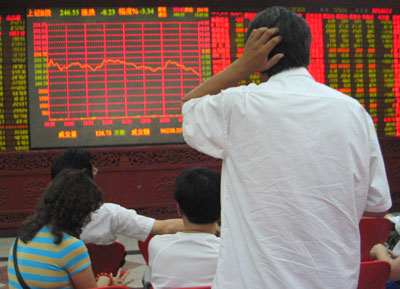
Market Turmoil - What Should We Do?
Most analysts have blamed the turmoil as a result of the sub-prime mortgage default problem. One should note that the name of the "sub-prime" is already indicating its high-risk nature. With the higher crude oil and interest rate, it should not be surprised to see the increasing default rate. It is basically a mis-pricing of the credit spread and it is healthy for the market to have such correction.
Looking back to our Asian region, any potential problem that could lead to such a recession? So far, I don't see any. With the booming economy and rising middle classes, China is definitely going to be another super economy and India is the next one. Locally government has launched several mega projects, waived the RPGT, increased government servant payroll to further stimulate local consumption. These measures will help cushion the impact in the event the economy turned down.
So what should we do? My opinion is that market will continue fall in the short-term. Why? Simply because more and more investors will withdraw from the hedge funds and hedge funds will be forced to unwind position. Expect more bad news to come in the coming weeks.
Advice:
1. Take this opportunity to do stock analysis
2. Look for companies that are under-valued, net cash (low debt) and having sound business model
3. Suggest utility and high DY companies.
4. Consider resource/commodity-based companies if the valuation is low enough
5. Personal recommendation: DIJAYA/ PLENITUDE/ TALIWORKS/ LITRAK/ MTDINFR/ MFCB/ PPB/ IJMPLNT/ AEON/ DIGI
NEWS - A Bigger LCCT
Located within the KL International Airport (KLIA) area and close to the main terminal, the project will take four years to complete.
Najib said the cost and the actual location of the new terminal which will be connected to the main terminal by rail service has not been finalised or identified.
Until this new facility is ready, he said the current LCCT near the KLIA, will be extended and upgraded, including work on the aprons and parking lots.
He said this after chairing the cabinet committee meeting on transport today.
Asked as to why a new terminal needed to be built when the current one will be expanded, Najib said it can take only between 10 and 15 million passengers per year, even with the extension.
It is learnt that with the projected pace of growth in low-cost control here and around the world, a bigger and better LCCT was needed.
"An immediate study will be done on the current LCCT's extension and upgrading works. An allocation will be finalised once the study is completed," Najib said, adding that the decision was made by the committee today.
He said that once the new LCCT terminal was completed, the old one will be convert for other use. He did not elaborate.
He said AirAsia would operate the new LCCT.
Transport Minister Datuk Seri Chan Kong Choy, who is also a member of the committee, said the new location "is within KLIA and closer to the main terminal".
On other matters discussed, Najib said the commitee agreed in principle to build new bus terminals, walkways and park-and-ride system in Kuantan, Kota Kinabalu, Tawau and Sandakan.
He said the Transport Ministry would do a study on this within a month before anything was done.
The committee also approved RM72 million for Sabah to buy locomotives and rolling stock for 30 level crossings.
"(Of the sum) RM57 million will be in the form of an easy loan, and the rest will be a grant," he said.
Source: TheSunDaily
My comments:
1. The current LCCT was constructed in June 2005 and fully operational in Mar 2006. After operating less than two years, Malaysia realized that the current LCCT cannot handle the increasing passenger volume(?!) What happened to the feasibility study conducted prior to the construction of LCCT? Looking abroad, we have already seen the tremendous success of low-cost carriers such as Ryan Airline, Virgin Blue & etc. Shouldn't Malaysia be foresight enough before start off with any projects?
2. Quoted from Star:"Transport Minister Datuk Seri Chan Kong Choy, who was at the meeting, said the current LCCT, which was first designed as a warehouse, would be converted into a cargo terminal when the new LCCT starts operations". Oh no, the LCCT is originally a warehouse!
3. I sincerely hope that the Transport Ministry can conduct a (really) comprehensive study for the new LCCT. Learn from other countries' experience and avoid expensive mistakes. We're a small country, but ambitious enough to carry out so many projects (IDR, NCER, Bakun & etc) at one time. Hope we're not over-stretching ourselves.